
Author Mark Woollacott
Questions and Answers
Copyright © 2019 Mark Woollacott, all rights reserved.
"I endeavour not to intentionally change any reader's world view or beliefs, but through my words I may gently open a small window through which the reader can know of something far greater and lovelier." — MW
I love having an Author Q&A page on my website because it gives me the chance to speak directly to the hearts of my readers and allows me to connect with readers in a more personal and meaningful way. Writing is such an intimate part of who I am — it's where my dreams, memories and emotions find their voice. By sharing the inspirations behind my stories and the nature of my writing process, I'm inviting you into a creative process that opens a window into the heart of my work.
Through these questions and answers, I can offer you a glimpse into my journey — my influences, my writing rituals. These questions and answers are more than just information; they're pieces of my journey, moments that have shaped not only my books but me as a person. My hope is that when you read them, you'll feel the same spark of connection I do.
What is Mysticism?
Christian mysticism (and mysticism in all faiths), is the belief that union with or absorption into God (the Deity or the absolute), may be attained through passive inner contemplation, repetitive prayer, or self-surrender of the ego identity.
Christian mysticism teaches that a deep union with God is possible, not through our own strength, but through quiet openness and a surrendered heart. This is what people of all faiths have in common; we truly are as spiritual brothers and sisters in this respect, and we perfectly understand this natural harmony that exists between us. It is the hope that, by turning inward in prayer and meditation, we might draw closer to the One who already surrounds us and holds us. This path isn't about special achievement or spiritual superiority — it is simply about making room for God to move within us. In humility, we seek to quiet the noise of our own ego so that His presence can be more clearly heard.
For many who have experienced already this (and we know of some of these individuals from their own sacred writings, which are still available to read today), this journey sometimes takes shape through simple, repetitive prayer — gentle words offered again and again until they soften the heart and steady the mind. In those moments, the prayer becomes less something we say and more something that shapes us, slowly guiding us toward a deeper awareness of God's love. It is a way of sitting with Him, listening, and allowing our souls to rest in His peace.
Ultimately, Christian mysticism is an invitation to let go of the illusion that we must control everything in our lives. Instead, it asks us to surrender our ego, our fears, and our constant striving, trusting that God meets us in that surrender. In opening ourselves so honestly and vulnerably, we may experience a quiet communion with Him — a closeness not earned, but graciously given.
Through my own gentle, inspiring encounters with the divine (through the practice of passive inner contemplation), I certainly resonate strongest with Christian mysticism. The presence of Christ in my life is wonderful and at times is very apparent in ways that I never expected. I trust in this completely and give my love back to God, in return, out of gratitude and thanks. Some of my books are the result of my mystical experiences, particularly the books containing inspired writings.
Q: What is 'Truth'?
In metaphysical/spiritual terms, it is an experience of the eternal part of yourself. It is a living experience of hunger for your God, and that's it. When people talk about truth and how to define it, it is really a way of equating a word (and its meaning) with your spiritual reality through direct experience — and having full awareness of this experience. Once experienced, your understanding of what truth is becomes clear and certain and never in doubt. It is the actual experience of truth that qualifies it. An intellectual understanding of truth is not the same thing, for that would merely be a carefully considered thought, theory and assumption which is then used as a fact. If I were to describe for you an account of my experience of truth, still that would not be an experience of truth for you.
Q: What is inspired writing?
Some of the writing in my book A Beautiful Reality came through as 'inspired writing'. What this means is that many of the words came into my mind without having to think them up; I simply typed (or wrote) them down as they flowed through me into awareness under their own momentum. This was an experience that felt perfectly natural. I did not set out to experience inspired writing; it simply happened to me. In some ways, it was like taking dictation from my mind — with no advance warning that it was going to happen. It is a form of writing that arises from a higher state of conscious awareness. This experience was completely new to me — and it was also quite unexpected!
It's hard to explain to someone who has not yet experienced it, except to say that it feels like the words come through as a peaceful, natural flow — already formed, already carrying a truth — waiting to be received rather than constructed consciously. It's not at all about altered states or trances; it's simply a moment when something higher and more beautiful makes its way into the writing.
Inspired writing doesn't involve meditating or going into some sort of religious trance-like state, nor is it the same thing as free writing or automatic writing; rather it happens when the writer is fully conscious and naturally alert — it 'just comes through', like an immediate flow of word thoughts into the mind. The only way I can describe the difference between inspired writing and ordinary everyday creative writing is that inspired writing genuinely seems to carry a greater 'beauty and resonating truth' in the words that are coming through into the conscious mind, and feels very natural and peaceful when it occurs — the words are already there for me, they are simply and gratefully received, but never constructed consciously. It is almost as if I (as the writer) am in a process of receiving a higher, creative gift, while listening to a mystical inner locution. If this inspired writing experience should ever happen to you, you will understand perfectly what I am describing.
Q: What inspires your books on spirituality, personal awakening and Christian mystical experience?
My writing draws deeply on themes of spirituality, Christian mysticism and inner transformation. Inspired by visions of Jesus and Mary Magdalene, passive inner contemplation experiences and moments of personal awakening, my books explore the intimate journey of self-discovery and divine connection.
Q: What role does personal awakening play in your storytelling?
Personal awakening is at the heart of my stories. Through the characters' transformative journeys, I explore universal truths, mystical visions and spiritual insight that invite readers into a shared exploration of the soul.
Q: How do your mystical experiences influence your writing?
Mystical experiences guide the imagery, symbolism and emotional depth in my work. From visions of divine figures to profound contemplative states, these moments shape the spiritual tone and message of my stories.
Q: Is it possible to view writing as a form of spiritual practice?
Most certainly. Consider all those monks and nuns (and all those early scribes) who dedicated parts of their lives to creating the ancient illuminated manuscripts that we see in museums, libraries and cathedrals today. Consider also those men and woman (some who became saints) who wrote of their mystical experiences of the sacred, or had witnessed events that were written at or just after the time when Jesus of Nazareth had lived — and also in the centuries that followed (and to this very day, in different parts of the world), those blessed men and women who also experienced sacred mystical revelation and experienced moments of transcendent bliss. For them it would certainly have been a spiritual practice: to produce something of beauty and profundity for the world. This is what spiritual means: to be inspired by the eternal, but also to be able to share with others that which has already been received inwardly from spirit.
So, it is a spiritual practice in the sense that a writer can cultivate a wonderful level of patience, inner peacefulness, inner enquiry and contemplation, and also enable a greater degree of intuitive improvement through such a creative practice (i.e. writing). Patience, inner peace, inner contemplation, inner enquiry and intuition are qualities that prove most helpful when on the spiritual path; because as a result of this, a person will be open to higher communication, through the Holy Spirit.
I feel the same way about my books A Beautiful Reality, Love Would Say and You Are Divine. I can only imagine that such inner discipline (for someone intending to write) is helpful to be receptive to spiritual inspiration and to create a written work guided by a process that is on a level not often experienced by some people — but I would certainly add that it is a process that will always be open to everyone.
Q: What research do you do?
In regard to the books A Beautiful Reality and Love Would Say, I did very little research, as the book came straight from my heart and mind. However, if I write a novel, I will often carry out some research and find out things which help me to create a greater accuracy and believability about the characters, the settings and time period in the story.
Q: How long does it take you to write a book?
It really depends on the book; sometimes it can be several years, sometimes less than a year. On average, it normally takes me between two and three months to complete the first draft. However, any books featuring inspired writing will take much longer. The next stage involves rewriting and formatting the entire book, and this brings an opportunity to add new content to the book or rearrange the chapters in a certain order to make it read better; and this might take another year's work. It is always worth taking the time to do things properly and not to rush things through when writing a book. There have been times when I felt guided by sudden flashes of inspiration to change or move things in my books. I continue rewriting and editing until I am fully satisfied that I can do no more with it.
Q: What is your work schedule typically like when you're writing?
It varies from day to day. Sometimes I will spend six hours at the computer, working on a book. In my early days of writing, I can remember spending up to fourteen hours each day. If I have other work commitments which take me away from writing (such as art commissions) then I may only get around to an hour's writing at most. I tend to read during the evenings, so most of the actual writing is done during the day. I sometimes like to listen to music when I'm writing (and when I'm painting) but I can work just as happily in silence.
One thing I never do is to give myself unnecessary and unmanageable deadlines (e.g. that I must finish a particular chapter by the end of the day, or I must write so many words every day); I never place such pressure on myself. Writing for me is always a pleasant, inspiring, peaceful and a fully committed process. I take my time with everything I create, simply because I wish to do the very best I can. I never regard the creative process as a thing which should be regarded as a matter of urgency. The creative process should always be an enjoyable experience.
Q: When did you first realize you wanted to be a writer?
I think it must have been around 1995 or 1996. I suddenly had the inclination to write a novel; it was quite a spontaneous decision really, and I felt it was something I had to do. There had been nothing, no hints at all, that had led up to that moment. However, saying that, I do recall being inspired during the early 1990s after reading Dante's Paradise (from the Divine Comedy). I enjoyed his writing very much and wished I could write to that high standard. For me, it brought a welcome beauty and elegance to the subject of spirituality and opened my mind anew to the concept of divine love — something I hadn't given a great deal of consideration to in my life.
My first novel was entitled The Gardens of Beauty. This has never been published. The source of inspiration for this novel was influenced by a vision of the Roman goddess of Roses, Lady Rose, which I experienced in 1989 — see my book Visions for more details about the vision. Elements of what I saw in the vision were used in the setting of the novel.
Moving forward. During 1998, I became interested in scriptwriting and learned another aspect of writing that I hadn't explored before. I continued to write novels, but also ventured into writing spec screenplays and sitcom scripts; but nothing emerged from it commercially. For me, it was a period of learning the craft; and, like any craft, it takes many years of dedication and work to see improvement.
Q: Why did you write A Beautiful Reality?
A Beautiful Reality is in some ways a document of my past, but it is also a document of hope and goodwill that aims to reach out to readers and touch them sincerely with kind intent. My book provides readers with a fresh way of looking at themselves and the world, so they may question everything for themselves and make their own minds up. I hope this book proves to be the catalyst that eventually leads to change for many of its readers, that opens the way for them to experience more kindness, peacefulness, love and happiness.
In some ways, as an author, I am trying to balance making gentle encouragements to the reader while at the same time also taking care of the reader. For example, there are many parts in the book where the reader is asked to look at the way they think about themselves, other people and the world in general, and I gently encourage the reader to try looking at these things with a fresh perspective and learn how to practice inner contemplation and cultivate greater peacefulness and patience in their lives. So, basically, I am asking something of the reader (something for them to do, to think about); but at the end of the day, it is entirely up to the reader if he or she wants to consider my recommendations or not.
I also endeavour to bring hope to the reader in many parts of the book. By placing my ideas (some of which may seem unusual) before them, it will hopefully bring tranquillity into their life, provide them with an insight into their spiritual nature, and allow scope for greater harmony with those they know — and those they do not know — which is not always as easy as it seems, but worth persevering with nonetheless, even if challenging moments arise from time to time.
Q: How much planning went into A Beautiful Reality?
When I first came up with the idea of writing this book, during November 2017, I did not really have a detailed plan; which was probably just as well, seeing as one of the things I have learned through writing this book is that when I start planning anything and shape how I think something might be and how it might end up, I begin to stray from the natural flow of things and, consequently, the 'planning' becomes more of a hindrance in some respects. So I've learned to trust more, and by doing so, I have relaxed into the creative process much more smoothly and have allowed the true outcome of my creations to come to fruition in the way they were always meant to. And so it was with this book: I only wanted to write something that would prove helpful and for its content to be an honest reflection of my personal experiences; and then I prayed it would all somehow fall into place ... and amazingly, it did. As I began writing, so the chapters took form and came together in a way which I had not envisaged at the beginning. Essentially, it resulted in a beautiful outcome.
Q: Do you have a favourite muse or a saint you are particularly drawn to for inspiration?
Not really. I have learned to simply trust in the guidance of the Holy Spirit (the Inner Guide) and to allow it to bring me ideas, messages and insights which are meant for the books I am writing. I started off being somewhat sceptical, but now I am trusting that higher connection more. Such inspiration can be received through visual imagery (in dreams, internal waking visions, inner contemplation, inner mystical locutions) and through ordinary daily experiences and interactions with people.
Q: Why are themes so important?
Whether we realize it or not, we are all influenced by themes — universal themes — such as love, beauty, poverty, abundance, survival, courage, time, spirituality, divinity, peace, unity, happiness, etc. Authors cannot avoid them — nor would they wish to — for it is the very backbone of living, learning and progression to a kind of betterness reached at a much higher level than what was known before. Authors are always face-to-face with themes at every waking moment and in every breath they take and in every opportunity in which they pause to reflect or prepare to enjoin others in new concepts. Without themes there would be nothing to 'sing' about and nothing to 'write' about. Creativity is naturally bound by them, always.
Q: Do you prefer to be original or to deliver to readers what they want?
I simply convey what I feel I need to express through my writing. In the example of my book A Beautiful Reality, I certainly had no notions of 'being original' or thinking of any potential future readership in terms of commercial aspirations and strategy. Any author who writes about the benefits of divine peace, joy, love and unity is not expressing originality; because these themes are older than time (and any author should know this well and know that he or she is only writing to remind), and so the appeal of such themes arise because they resonate the only truth proven to be true. How can anyone doubt the benefits of being loving, kind, peaceful, compassionate and showing goodwill and fellowship — what is there not to like about such things? Why on earth would anyone in the world wish to argue against exploring such themes or imagine fault in what is, at its very essence, a very pleasant and wondrous human experience?
When I write a book, it does not occur to me to consider creating an interesting 'take' or a particular style for myself as an author. I simply write about what I believe in and have personally experienced and present it as it is, in an honest way.
Q: Do you want each of your books to stand on their own or are you developing a body of work with common connections between each book?
Although I have written a couple of novels, which do indeed stand alone in their separate genres, my recent books A Beautiful Reality and Love Would Say will become part of a new body of writing that aims to explore the spiritual and metaphysical association between how we exist and function in a physical reality (as we currently understand it) and at the same time become aware of the true Self and all the inner gifts that it can bring (e.g. inner peace, love, joyfulness, unity). My books hopefully convey to the reader that progression can be made by introducing a spiritual outlook that can complement how we manage ourselves daily in a material world. Learning is a lifelong experience and at anytime we can be tested and once again find ourselves learning the basics all over — this is life learning and it goes on and on.
Q: Describe an early experience where you learned that language had power?
I must have been in my twenties when I first came across the writings of the poet Dante Alighieri (a thirteenth-century poet from Florence, Italy, who wrote the Vita Nuova and Divine Comedy). I learned that words could convey rich beauty and spiritual significance when written through higher consciousness and benevolent motivation. I loved reading Paradise, and his love for Beatrice (who was his guide during his visionary journey through the heavens). It was delightful and it made quite an impression on me in terms of my aspirations as a writer.
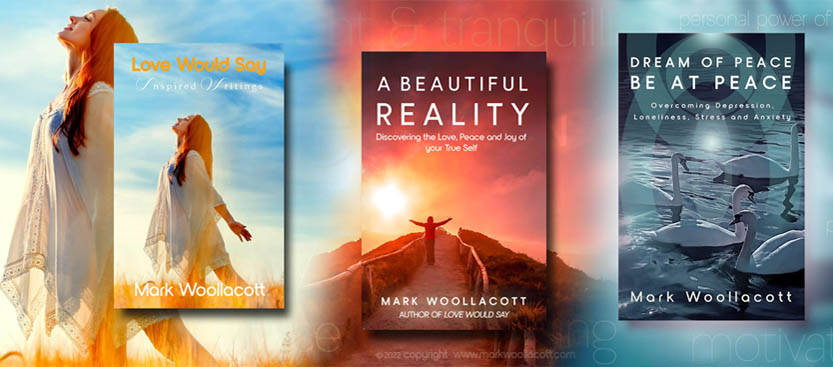
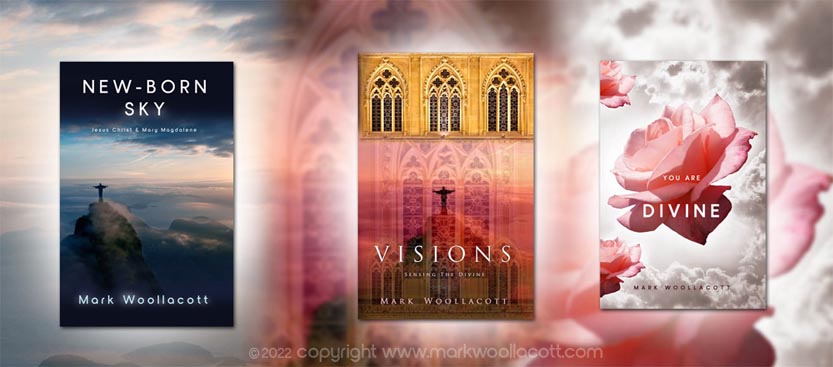
Q: What did you edit out of your book A Beautiful Reality?
During my first rewrite I removed almost a quarter of the entire manuscript! A lot of what I removed was extracts from my journals, describing various visionary experiences I had during the course of my life, which I felt might be of interest to the reader. In the end, I realized this content didn't need to be in the book and would only distract from what I was attempting to convey in the A Beautiful Reality. I decided it would be far more helpful to feature the visionary experiences in a separate book.
Q: If you could tell your younger writing self anything, what would it be?
Be patient, enjoy writing, improve your writing skills, realize you cannot plan your life exactly as you would like it to be; yet still endeavour to achieve the dreams you would aspire to and learn to listen and trust in the Inner Guide for inspiration and for good outcomes!
Q: If you didn't write, what would you do for work?
I would continue to be an artist and paint commissions for clients. Also, I would like to do more with my love of music at some point.
Q: What is your favorite childhood book?
Charlie and the Chocolate Factory by Roald Dahl. I read it at school, during the 1970s, and quite liked the idea of the 'impossible' and the 'improbable' being entirely possible!
Q: Have you ever experienced writer's block?
Only once can I ever recall reaching a point when writing where I felt I wasn't yet ready to continue any further. After writing about five chapters of a book, entitled This Twilight Garden, I felt as if I had reached a point where I had no idea what would occur next in the story. This occurred to me while writing a novel that I began on 19th February 2013, which went on hold, and was resumed again on 5th March 2022, and finally published on 13th November 2022. This has been the only instance in all the years that I have been writing, where I came to a creative halt.
Q: What motivates you?
The search for spiritual truth and higher divine beauty has motivated me since my late teenage years. This inner need has led me to express and share my thoughts and beliefs with others via the medium of painting, music and writing. But alongside that motivation is the constant reminder of the world and how to live and work in it and learn to cope with the many pressures which often arise. It is always a learning process; it never goes away and everything has to be faced eventually.
Q: What do you see as your strengths?
I like to write with considerable care and completeness, with sincerity and with an approach that engenders positivity and beneficial outlooks when searching for creative inspiration. I do not rush projects; it has always been my standard to do the very best I can when creating any work. I stand quietly firm in my inner convictions and beliefs (but not to the point of stubbornness or arrogance) and respect other people's views and beliefs.
Q: What do you enjoy doing in your spare time?
I enjoy walking along parts of the British coastline and enjoy hiking in the mountains when I can find the precious time to do this. I wild camp when I can and enjoy meeting fellow walkers when I am on my mountain walks. I also enjoy attending Choral Evensong from time to time. Sacred music uplifts me profoundly and is a way to connect to higher thoughts and energies. Listening to music performed in a sacred environment is quite a powerful and beautiful experience for me. Tandem skydiving is also something I have done in the past. It is an amazing experience, being 15,000 feet up in the sky and free-falling towards the ground for about a minute and then parachuting for the remaining moments. I have also been a passenger in a motorglider and have flown over parts of the South Devon coastline. I enjoy listening to relaxing music and practise passive inner contemplation daily.
Q: What can you tell me about your past?
I was raised in a traditional working-class family by loving, caring parents who gave me and my siblings a happy and grounded upbringing in the South West of England. I attended church services most Sunday mornings and attended Sunday School until the age of nine or ten. I was also a member of the cub scout association. At school, I was always more creative than academic as a pupil — though I did like some of the sciences. I always looked younger than others my age and was quite small in build. I was a quiet pupil, but I had lots of friends and was always outdoors with them, as a teenager, cycling or playing football, and was a member of an athletics club for a number of years, participating in local athletics and cross country running events with my siblings and school friends.
At sixteen, I studied Art and Design at college and became interested in music. During this time, I worked part-time in the kitchen of a hotel, washing dishes (during the evenings and on weekends) in order to earn money and to begin saving for the small things I wanted in life. Following this, I worked full time in manufacturing, at a factory. I was a machine operator for four years.
My interest in spirituality and Christian mysticism began at this time and I felt an awakening to something that, in some ways, wasn't really new to me, but somehow felt already familiar to me at a deeper level, like a gradual rising of 'inner knowing' from the depths of my subconscious even though I had already had some learning from going to church as a boy: the idea of God and divine beings existing at a higher level of existence; the idea that I might one day be able to connect to such beings (though I didn't know how at the time) and experience a higher beauty and peace via the Holy Spirit. I believed it was possible for people on earth to experience this — potentially all of us, at some point — for such experiences have already happened many times to people in the past and have been well documented.
I also worked in retail for a number of years (mostly warehouse and shopfloor duties, working morning and evening shifts) in between periods of unemployment. I worked for ten years at a supermarket. My income was always modest and I rarely went on holidays. During my spare time, I continued my passion for drawing and painting, but there was never an opportunity during those years of my life for me to earn a living from my art. I took up writing in the mid 1990s and submitted my work to publishing houses and literary agents, but every submission was rejected and I never made any income from writing.
In 2010, I became self-employed as an artist and found myself represented by a number of art galleries in the United Kingdom. My income as an artist was typically sporadic and low, but painting was where I felt most alive, and so I persevered. Two years later, I discovered self-publishing and, for the first time, had a way to share my books with the world without the gatekeeping of traditional publishers. Through Amazon's online platforms, I could reach readers directly. I embraced every stage of the process — writing, editing, formatting, designing my book covers and promoting my titles online. My journey has never been glamorous, but it has been mine: shaped by persistence, long hours of quiet creativity, honest inner enquiry and passive inner contemplation, and a deep love for making things — whether on canvas or on the page.
Q: Do you have a question?
If you have any questions you would like to ask me, then please email me at info@markwoollacott.com and I may add them, along with an answer, to this page. If you would like to learn more about my books and how and why they came about, you will find more information in my Blog Section, where you can access information about each of my published books.
My books are only available in English. They are not yet available in other languages. All publishing, translation, recording, broadcasting, and all other rights, including copyright, belong solely to the author.
Order the Photographic Print
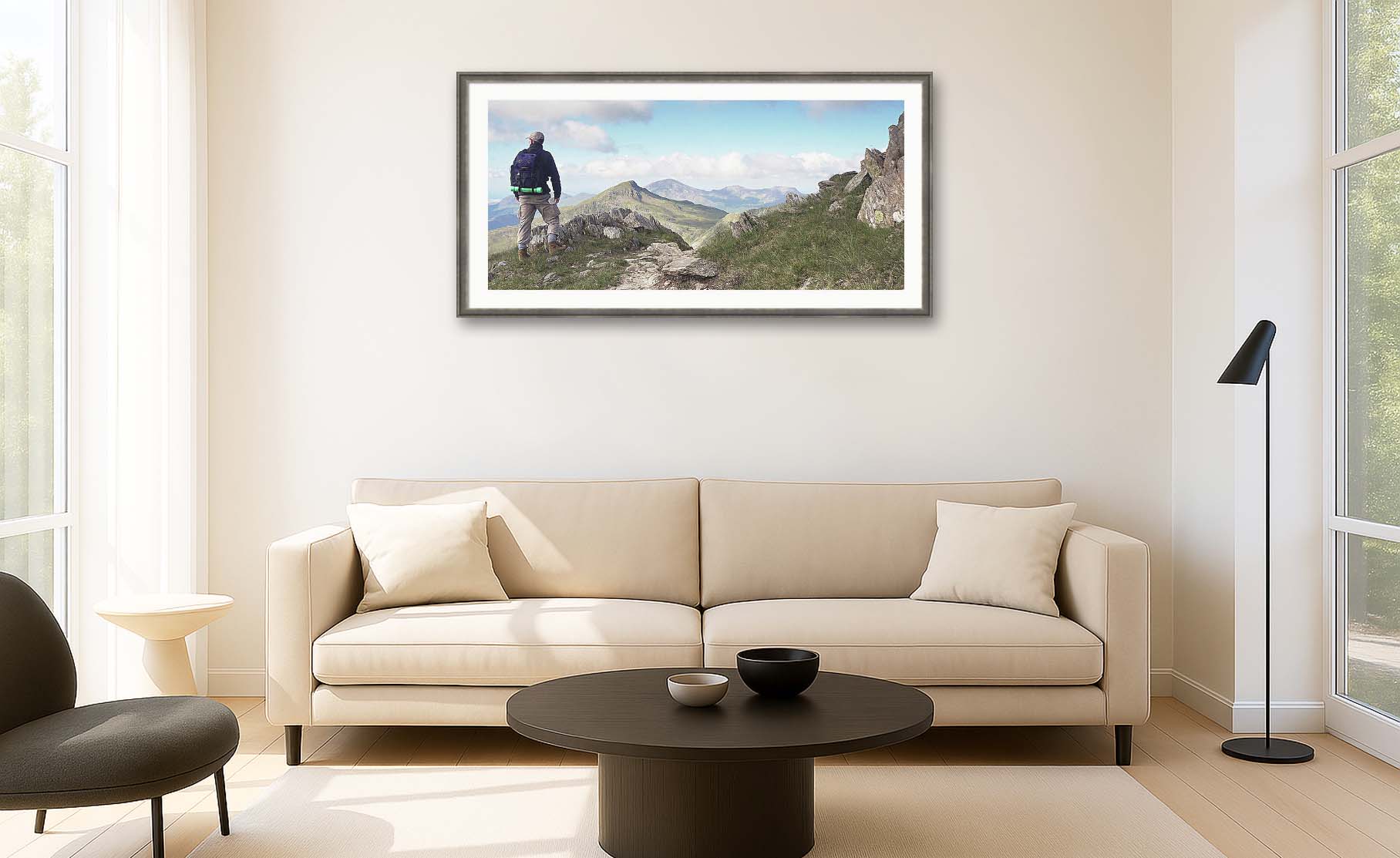
A photographic print of Mark Woollacott hiking in the mountains of Snowdonia is available to buy online at Fine Art America. Choose from a variety of print sizes, select quality fine art papers, print types (e.g. paper print, canvas print, metal print etc.), and framing options to suit your home or style.
Fine Art America has been selling Mark Woollacott's art prints since 2014, and has been in business since 2006 and are one of the largest, most-respected online art sites in the world, with more than 500,000 independent artists, and deliver worldwide. Fine Art America has the largest print-on-demand fulfilment network in the world. They have sixteen manufacturing centres located in five countries. Each manufacturing centre can ship products to any destination in the world.
To order your print, click or tap on the logo below to go direct to my profile page at the Fine Art America website:

Intellectual Property
All images (including those featuring an online image watermark), text, and design elements on this website are the intellectual property of Mark Woollacott unless otherwise stated. Unauthorized copying, reproduction, distribution, broadcasting or use of any content — whether for commercial or personal purposes — is strictly prohibited. Please respect English and international copyright law.